
The average tax bill for an IHT-paying estate climbed 9% year-on-year to £231,000, according to the latest HMRC stats.
Frozen allowances mean the proportion of deaths resulting in an IHT charge rose to 4.72%, the highest level since 2006/07.
Exempt transfers between spouses continued to top the list of reliefs by value, helping shield £6.8bn from tax on first death.
The combined value of business and agricultural property relief soared to nearly £6bn, according to the data.
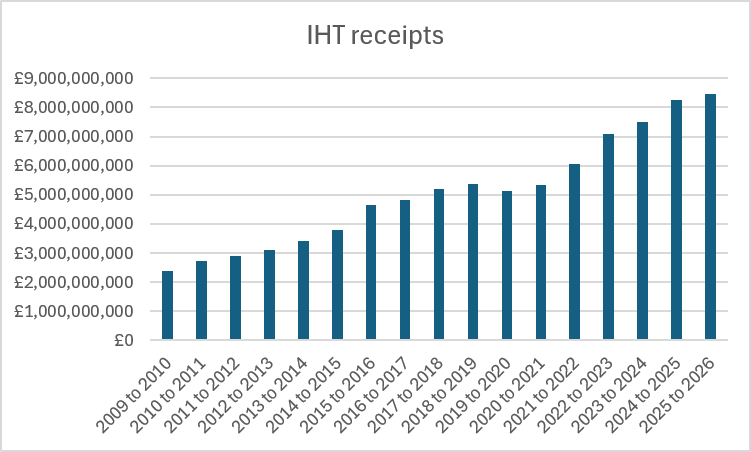
Source: AJ Bell/HMRC Annual summary of HMRC tax receipts for the UK, 21 July 2026
Charlene Young, senior pensions and savings expert at AJ Bell, said: “These figures show how IHT has become a growing concern for more families, three years before we see the impact of Labour’s death tax raid on businesses, farmers and unused pensions.
“Although only around 5% of estates pay the tax, the amount being collected continues to hit new records as property values and investment wealth have risen while key tax thresholds have remained frozen.”
She pointed out that everyone can pass on up to £325,000 before any IHT is due, although the IHT nil rate band has been frozen since 2009. The residence nil rate band (RNRB) has been available since 2017 and gives a boost of up to £175,000 per person if a property is left to their direct descendant(s).
She said a combination of the bands means most couples can pass on up to £1m on second death, but had both bands been uprated with inflation rather than being frozen in 2020, a couple could currently pass on an estate worth more than £1.49m combined, a figure which could rise to over £1.62m by the time the freeze is due to end in April 2031.