
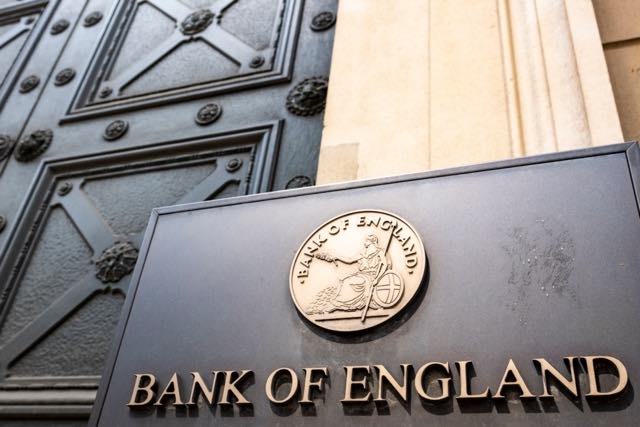
The Bank of England’s Monetary Policy Committee (MPC) has kept the base rate at 3.75% today, the same as its last review in February.
The decision was widely expected by industry experts.
The MPC voted unanimously to hold the rate.
The MPC noted that the US-Israeli attack on Iran had caused major movements in markets, particularly the prices of oil and gas, and is keeping a close eye on the situation.
Some experts have forecast that the spike in the price of oil and gas will push up inflation, currently at 3% CPI, in the short term.
The MPC reiterated, however, that its CPI inflation target remains at 2% while warning that CPI inflation will likely rise in the near future.
In a statement today the MPC said: "At its meeting ending on 18 March 2026, the Monetary Policy Committee (MPC) voted unanimously to maintain Bank Rate at 3.75%.
"Conflict in the Middle East has caused a significant increase in global energy and other commodity prices, which will affect households’ fuel and utility prices and have indirect effects via businesses’ costs. Prior to this, there had been continued disinflation in domestic prices and wages. CPI inflation will be higher in the near term as a result of the new shock to the economy.
"Monetary policy cannot influence global energy prices but aims to ensure that the economic adjustment to them occurs in a way that achieves the 2% target sustainably. The MPC is alert to the increased risk of domestic inflationary pressures through second-round effects in wage and price-setting, the risk of which will be greater the longer higher energy prices persist. The MPC is also assessing the implications for inflation of the weakening in economic activity that is likely to result from higher energy costs."
"The Committee will continue to monitor closely the situation in the Middle East and its impact on global energy supply and energy prices. It stands ready to act as necessary to ensure that CPI inflation remains on track to meet the 2% target in the medium term."
Reaction from the industry was one of no surprise but with caution that the situation in the Middle East remained fragile and the economic impact of this was yet to be fully played out.
Nigel Yeo, chief client officer at The Private Office (TPO) said: “We felt that it would have been an over-reaction by the Bank of England to have raised rates today, as we need to wait a little longer to see how things play out. However, the rate cutting cycle has come to an end sooner than expected, due to the ongoing conflict in the Middle East and the inflationary risk this brings.”
“Of course we have seen immediate reactions in both the bond and equity markets, with bond yields increasing significantly since the conflict began, bringing bond valuations down and equity markets falling too.”
Chris Beauchamp, chief market analyst at IG: "If anyone was in doubt as to how the BoE would respond to the current situation, then today is clear. A dramatic shift has taken place, and (base rate) hikes are back on the table as the bank scrambles to respond to the likelihood of another inflation surge. This was all unthinkable just weeks ago, but is a sign of how the war with Iran has upended everyone's forecasts."
Charlie Ambler, co-chief investment officer and partner at wealth manager Saltus, said: “As the conflict in the Middle East continues to escalate, increased oil prices are poised to push up the headline rate of inflation to near double the Bank of England’s 2% target. This is a direct threat to the Bank’s slow and steady rate cutting cycle, with markets now increasingly pricing in a change of course.
“While rates have been held at 3.75% today, hikes later this year are now being priced in by the market. However, this depends entirely on how long the conflict goes on and oil prices remain elevated. While markets will be looking for reassurance amid this uncertain backdrop, any forward guidance will likely remain cautious.
“The risk of renewed pressure later in 2026 is now front of mind for investors. With both the FTSE 100 and S&P 500 falling sharply over recent days, bond yields rising and ongoing gold price volatility, geopolitics continues to shape asset allocation decisions. However, as long term returns are driven by maintaining diversified exposure to quality assets, the focus should remain firmly on quality and resilience, underpinned by a disciplined approach portfolio construction.”