
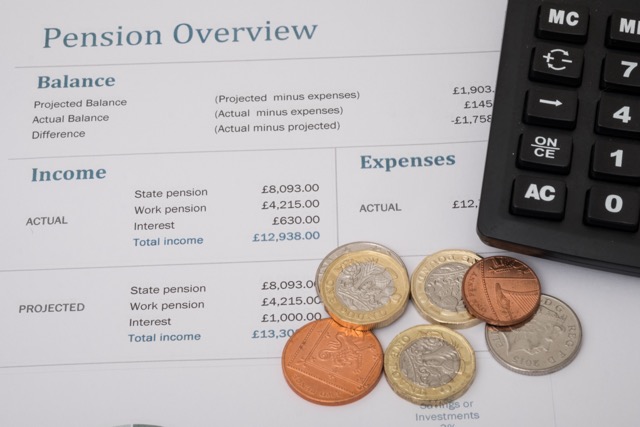
The State Pension looks set to rise by 3.9% next April after the average earnings figure for the three-month period ending July 2026, published by the ONS today, came in at 3.9%.
Under the Triple Lock guarantee, the State Pension increases by the highest of the rise in prices for September, average earnings growth for the three-month period ending in July, or 2.5%.
September’s CPI rate is likely to come in below 3.9%, so unless there are any revisions to July’s earnings growth figure, the pension increase in April is likely to be 3.9%.
That will mean the full ‘new’ State Pension should increase from £241.30 per week (around £12,548 per year) to £250.70 per week (around £13,036 per year) in April 2027.
The ‘old’ State Pension should increase from £184.90 per week (around £9,615 per year) to £192.10 per week (around £9,989 per year).
Claire Trott, head of advice at St James’s Place, said: “While many pensioners will welcome the boost, this will take the full new State Pension above the £12,570 Personal Allowance for the first time, by around £466.
“While those relying solely on the State Pension are not expected to pay income tax, those with other sources of income, such as private pensions, savings or employment, could find more of that income subject to tax.”
Clare Moffat, tax and pensions expert at Royal London, said: “t’s a double whammy for some -a higher tax bill, and a reduction on the amount of interest you can earn in a savings account before paying tax – down from £1,000 to £500. If you take pension income flexibly then it might be worth reducing that income to below the higher rate if you can.”
Former Pensions Minister Steve Webb, partner at LCP, pointed out the Government has said that a narrowly defined group of pensioners – those wholly dependent on the new state pension (with no private pension) or the old ‘basic’ pension, “with no increments”, will not have to pay income tax.
The Government has not yet set out how this will work. But based on the policy as described to date, LCP analysis suggests that just 1 in 16 pensioners may benefit from this concession.
Mr Webb said: “The Government’s plans to address this point are a mess, and likely to benefit only a small fraction of pensioners. They will also create unfairness between different groups of pensioners and between pensioners and low-paid workers, who do not qualify for any exemption.”
Some experts said the expected increase puts further pressure on the Triple Lock.
David Brooks, head of policy at Broadstone, said: “The increase will sharpen the question of whether the Triple Lock remains affordable over the long term given the UK’s precarious public finances. It is important not to throw the baby out with the bathwater as protecting pensioner living standards remains vital, but the system also has to be fair and financially sustainable across generations.
“Transitioning to a double lock that protects increases in line with working-age benefits would seem the most likely compromise given it is today’s workers who ultimately fund the State Pension.”
Rachel Vahey, head of public policy at AJ Bell, said: “Up to now, politicians of all stripes have pledged allegiance to the triple lock. But as Chancellor John Healey drafts Budget plans on how the UK can face up to its fiscal challenges, it could be that cracks in this cast-iron support may start to show. The longer this unexploded fiscal bomb is left untouched, the harder it will be to diffuse – and the greater the chance proposed state pension age increases will need to be accelerated to balance the books.
“A sensible approach would be to set a target for the triple lock policy, most likely a value of the state pension as a proportion of median earnings, and then a pledge to peg state pension increases to earnings growth or inflation. Any party that wanted to oppose such an approach would need to present a credible alternative, and keeping the triple lock forever certainly doesn’t fit with the government’s desire for long-term fiscal responsibility.