
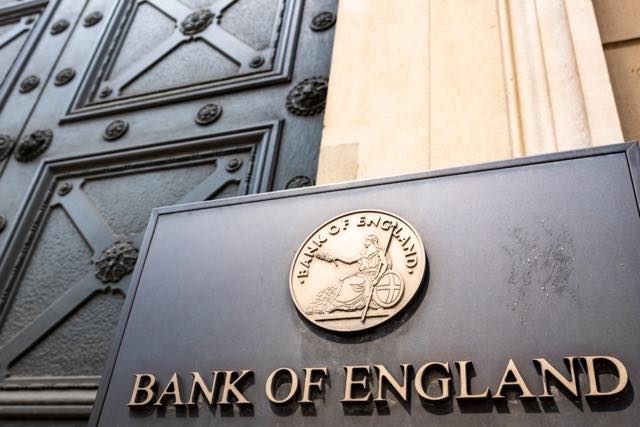
The Bank of England’s Monetary Policy Committee (MPC) voted today to increase the Base Rate by 0.25 percentage points from 3.75% to 4%.
It's the first rise in the Base Rate for over 3 years and was expected by the markets.
Members of the Monetary Policy Committee voted 8-1 to increase the rate by 0.25 percentage points to 4%. One MPC member voted to increase Bank Rate by 0.5 percentage points, to 4.25%.
The increase was mostly due to efforts to combat rising inflation, with the MPC warning that UK CPI inflation could hit 5% by mid next year.
The MPC said in a statement after the meeting: "The conflict in the Middle East is now in its ninth month. Global energy prices have continued to rise from an already elevated level.
"UK CPI inflation increased to 3.5% in September. It is now expected to rise to around 5% by the middle of next year. It is then projected to fall as the impact of rising energy prices on 12-month inflation rates fades, and still restrictive monetary policy bears down on inflation.
"While the direct effects of higher energy prices are clear, and will continue to feed into firm and household energy bills, there remains limited evidence of knock-on effects on other prices and wages. However, the degree of inflationary pressure in the pipeline is now sufficient to warrant an increase in Bank Rate. Activity data in recent months have generally been stronger than expected, adding to the case for modestly tighter monetary policy.
"Monetary policy is not on a pre-set path. The Committee will continue to assess the evidence at each meeting, in particular how likely high energy prices are to feed through to other prices and the economy more broadly, by monitoring the evolution of underlying pay, pricing behaviour, and slack. The Committee will adjust Bank Rate as necessary to ensure CPI inflation returns to the 2% target in the medium term."
With inflation showing signs of rising, the Bank has been under pressure to act. Soaring fuel costs around the world and domestic problems with inflation have pushed up prices most of this year. In the most recent figures, the 12 month rate of CPI inflation jumped to 3.5% in September from 3.1% in August, mainly due to higher fuel costs, ONS said.
The bump up in inflation was down to rising transport costs, mainly motor fuels which provided the biggest upward contribution to the monthly change in both CPIH and CPI annual rates. Conflict in the Middle East has seen fuel costs rise rapidly over the past few months, easing slightly recently.
The rises in inflation are well above the Bank of England’s target of 2% and the Bank says it remains committed to lowering the rate of inflation towards its long term target.
Reaction from industry experts was one of concern about the direction of inflation.
Susannah Streeter, chief investment strategist at the Wealth Club, said: "’Bank of England policymakers are trying to douse the flames of inflation by raising the base rate by 0.25 percentage points to 4%.
"A hike was widely expected, so it hasn't set off fireworks on financial markets, but it will give borrowers a shiver as budgets become stretched in the year ahead. Policymakers were unanimous in their plot to raise rates, which may strengthen expectations of further hikes to come."
Nigel Green, CEO of international adviser deVere Group, said: "Today’s move looks to me like the start of something, and I believe a second rise at the 17 December meeting is more likely than many expect.
“Inflation is still climbing. Fuel costs have jumped because of the conflict in the Middle East, the energy price cap is set to rise again this winter, and the Bank’s own projections have inflation pushing above 4% early next year. Crossing 4% matters. Research published by the Bank last year suggests temporary price shocks are far more likely to become embedded in wages and prices once inflation goes beyond that level.
“The Bank has effectively told us where its danger zone is. If inflation is on course to cross that line within weeks, waiting until February means reacting after the damage has already been done.”
• The next Bank of England interest rate decision will be on 17 December.