
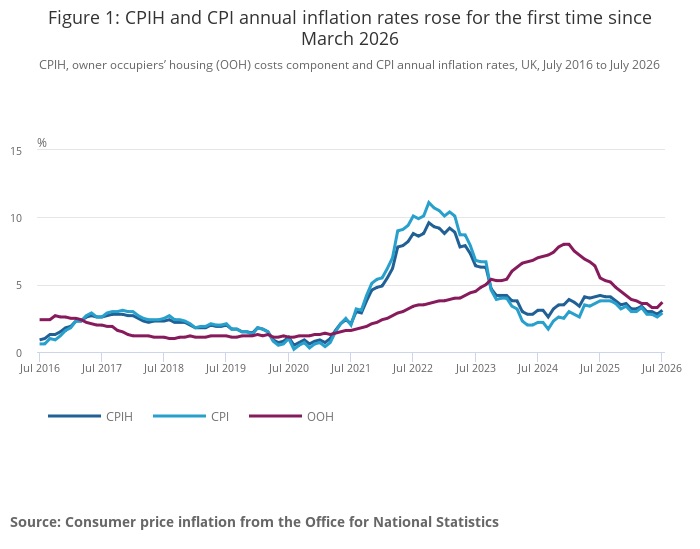
CPI inflation jumped to 2.9% in July from 2.6% in June in what’s been seen as a blow to the government.
CPIH and CPI annual inflation rates rose for the first time since March.
The rises, detailed in ONS figures published today, were slightly higher than experts expected and have been blamed on a rise in housing and household costs and furniture costs. ONS said higher gas prices had also affected the figure as the energy price cap was raised earlier in the summer.
Transport made the largest downward contribution, partially offsetting the rise, as fuel prices eased earlier in the summer on Middle East peace hopes.
The CPI rate is significantly above the Bank of England’s long term 2% target.
On a monthly basis, CPI rose by 0.3% in July, compared with a rise of 0.1% in July 2025.
The wider Consumer Prices Index including owner occupiers' housing costs (CPIH) rose by 3.1% in the 12 months to July, up from 2.8% the previous month.
Core CPIH (CPIH excluding energy, food, alcohol and tobacco) rose 2.9% in the 12 months to July, up from 2.8% in June. The CPIH goods annual rate rose from 1.7% to 2.2%, while the CPIH services annual rate was unchanged, at 3.6%.
Core CPI (CPI excluding energy, food, alcohol and tobacco) rose 2.6% in the 12 months to July, unchanged from the 12 months to June while the CPI goods annual rate rose from 1.7% to 2.2%. The CPI services annual rate eased from 3.6% to 3.4%.
The older measure of inflation, RPI, rose from 3% in June to 3.2% in July.
Jonathan Raymond, investment manager at investment adviser Quilter Cheviot, said: “With July’s energy price cap now in effect, inflation in the UK has jumped once again and is back to touching 3%.
“A renewed spike in inflation has been expected as the war in the Middle East continues to navigate a clunky ceasefire. Things remain far from normal in the Strait of Hormuz and look unlikely to be resolved any time soon, meaning pressure is likely to remain on prices for the remainder of the year at least. That said, inflation is expected to moderate in the coming months as government activities begin to take effect on the headline number.
“Cuts to VAT on energy bills and discounted leisure and hospitality offerings will begin to feed through in official numbers, but unlikely at the pace needed by the Bank of England to feel safe to start considering rate cuts. Indeed, these government initiatives are unlikely to move the economic dial until the Budget comes around in October.”
Scott Gardner, investment strategist at digital investment firm JP Morgan Personal Investing, said: “As the situation in the Middle East remains uncertain, the continuation of elevated energy costs remains the largest challenge for consumers and businesses. Petrol prices have already risen 6.3% in August compared to the previous month and will show up in next month’s reading.
“Businesses are also facing higher input prices which are being passed on to buyers and could rise heading into the colder months later this year. Falls in services inflation and shop prices are helping to offset some of these pressures for now but the jury is out on whether this will last. While one data reading doesn’t always tell the whole story, this rebound in UK inflation is a warning shot for what could come next.”